

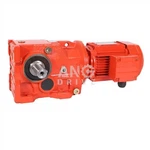
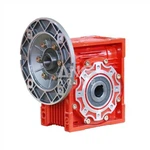

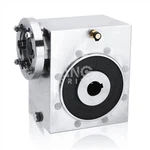
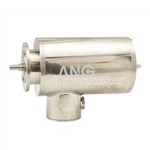
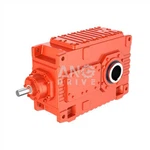
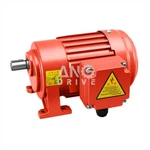
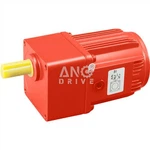
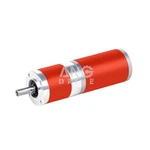
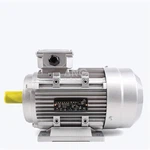
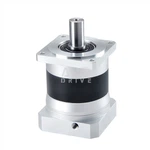


Motor Gearbox Dc
Motor Gearbox DC Parameters:
1) Dimensions: 16~130mm
2) Power: 3~2200W
3) Voltage: 12V 24V 48V 90V 110V 310V
4) Rated speed: 2000rpm, 3000rpm
5) Reduction ratio: 3~ 200
Motor Gearbox DC Features:
1. Compact structure and simple assembly;
2. Wide speed ranges and high torque;
3. Low noise, good sealing performance, high efficiency;
4. Stable and safe, long lifetime, universal;
5. Multi-structure, various assembling methods
Motor Gearbox DC Specification:
|
Product Name |
ANG DC gear motor |
||
|
Motor type |
Brush type / Brushless type / Stepper type |
||
|
Frame size |
16mm ~ 130mm... can be customized |
||
|
Running speed |
Motor 1500-4000 rpm, Gear Ratio 1/3 ~ 1/3000 |
||
|
Output power |
3W ~2200W... can be customized |
||
|
Output shaft |
round shaft, D-cut shaft, key-way shaft, hollow shaft… |
||
|
Voltage type |
12V / 24V / 36V / 48V / 90V / 110V /220V... can be customized |
||
|
Accessories |
Internal driver / External driver / Connector / Brake / Encoder… |
||
|
Motor Gearbox DC type |
Parallel shaft |
||
|
Right angle hollow worm shaft |
Right angle bevel hollow shaft |
Flat type hollow shaft |
|
|
Right angle solid worm shaft |
Right angle bevel solid shaft |
Flat type solid shaft |
|
|
Planetary center shaft |
|||
A transmission is a machine in a power transmission system, which provides a controlled application of power. Often the term 5-speed transmission refers simply to the gearbox, that uses gears and gear trains to provide speed and torque conversions from a rotating power source to another device.
In British English, the term transmission refers to the whole drivetrain, including clutch, gearbox, prop shaft (for rear-wheel drive), differential, and final drive shafts. In American English, however, the term refers more specifically to the gearbox alone, and detailed usage differs.
The most common use is in motor vehicles, where the transmission adapts the output of the internal combustion engine to the drive wheels. Such engines need to operate at a relatively high rotational speed, which is inappropriate for starting, stopping, and slower travel. The transmission reduces the higher engine speed to the slower wheel speed, increasing torque in the process. Transmissions are also used on pedal bicycles, fixed machines, and where different rotational speeds and torques are adapted.
Often, a transmission has multiple gear ratios (or simply "gears") with the ability to switch between them as speed varies. This switching may be done manually (by the operator) or automatically (by a control unit). Directional (forward and reverse) control may also be provided. Single-ratio transmissions also exist, which simply change the speed and torque (and sometimes direction) of motor output.
In motor vehicles, the transmission generally is connected to the engine crankshaft via a flywheel or clutch or fluid coupling, partly because internal combustion engines cannot run below a particular speed. The output of the transmission is transmitted via the driveshaft to one or more differentials, which drive the wheels. While a differential may also provide gear reduction, its primary purpose is to permit the wheels at either end of an axle to rotate at different speeds (essential to avoid wheel slippage on turns) as it changes the direction of rotation.
Conventional gear/belt transmissions are not the only mechanism for speed/torque adaptation. Alternative mechanisms include torque converters and power transformation (e.g. diesel-electric transmission and hydraulic drive system). Hybrid configurations also exist. Automatic transmissions use a valve body to shift gears using fluid pressures in response to speed and throttle input.
Hot Tags: motor gearbox dc, China, suppliers, manufacturers, factory, wholesale, price
Previous
Brushless Direct Current MotorNext
DC GearYou Might Also Like



Send Inquiry