

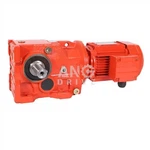
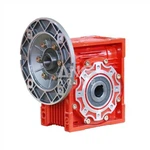

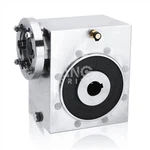
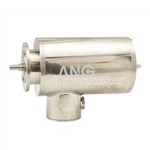
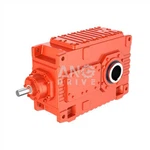
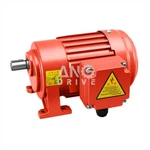
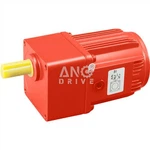
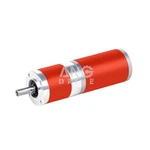
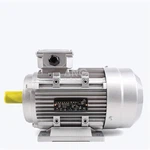
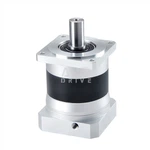


stepping motor
Product Introduction of The Stepping Motor
The Stepping Motor is a motor device that converts electrical pulse signals into precise angular or linear displacements. It is a digitally controlled motor, and its motion is discrete and precisely quantifiable. Precise position and speed control is achieved by controlling the number and frequency of input pulses. It mainly consists of stator windings, a rotor, a shaft, a housing, and other components. It is a common actuator in automated control systems and is widely used in fields such as robotics, automated warehousing, stage lighting control, textile machinery, etc., providing a power source for precise actions of various devices.

1.Accurate Position Control
By precisely controlling the number of input pulses, the rotational angle or linear displacement of the motor can be precisely controlled, and the positioning accuracy can reach a very high level, meeting the requirements of high-precision positioning. For example, in electronic chip manufacturing equipment, tiny components can be accurately moved to specified positions.
2.Simplicity of Open-Loop Control
It adopts an open-loop control system, eliminating the need for complex feedback devices, which simplifies the structure and cost of the control system. Precise control of the motor can be achieved simply with a pulse signal generator and a driver, making it suitable for application scenarios that are cost-sensitive and have low requirements for system complexity.
3.Multiple Step Angle Options
It offers various step angle specifications, and users can select an appropriate step angle according to different application requirements to meet different resolution and speed requirements. For example, a smaller step angle can be selected for some equipment that requires slow motion and high-precision positioning, while a larger step angle can be selected for some equipment with higher speed requirements.
4.Self-Holding Torque Feature
When the motor is at rest, it can generate a certain holding torque even without current input, enabling the motor to maintain its current position without power, avoiding position deviation due to external forces. This is very advantageous in situations where position needs to be maintained during power outages, such as in lifting devices or valve control.
5.Smooth Operation at Low Speeds
It can achieve smooth rotation at low speeds, avoiding the jitter that may occur in traditional motors at low speeds, ensuring the stability and reliability of the device during low-speed operations. It is suitable for equipment that requires precise and slow operations, such as plotters.

1.High-Precision Positioning Advantage
In equipment with extremely high requirements for position accuracy, it can ensure accurate positioning, reducing the defective product rate caused by positioning errors, improving product quality and production efficiency. For example, in laser cutting equipment, it can ensure the accuracy of the cutting position.
2.Significant Cost Effectiveness
The simple open-loop control structure reduces the use of feedback devices, lowering the overall system cost and the complexity of system maintenance. For some small automated equipment manufacturers, it can reduce costs and enhance product market competitiveness.
3.High Application Flexibility
The selection of multiple step angles enables it to be widely used in different industries and equipment. Whether it is instrumentation equipment requiring fine operations or automated equipment requiring rapid positioning, good performance can be achieved by selecting an appropriate step angle to meet different user needs.
4.Position Locking during Power Outage
The self-holding torque feature can lock the motor position in the event of an unexpected power outage, preventing safety accidents or position loss of the equipment due to power outages, improving the safety and reliability of the equipment. For example, in the anti-pinch protection device of elevator doors, it can prevent the door from accidentally opening during a power outage.
5.Stable and Reliable at Low Speeds
The smooth characteristics of the motor at low speeds ensure the stable operation of the equipment, reducing vibration and noise during low-speed operations. It provides a quieter working environment for operators and also extends the service life of the equipment. For example, in the adjustment mechanism of precision optical equipment, it can ensure the accuracy and stability of adjustment.





Technical parameters:
|
Product Name |
stepping motor |
|
Dimensions |
Nema 8(20mm), 11(28mm), 14(35mm), 16(39mm), 17(42mm), 23(57mm), 24(60mm), 34(86mm) |
|
Step Angle |
Degree 0.9, 1.2, 1.8(Optional or Customized) |
|
Torque |
Up to 350mNm without gearbox |
|
Rated Current |
0.1A~10A (A/Phase) |
|
Gear type |
Planetary gear motor, worm gear motor, helical gear motor |









More products and information
Product page is only part of our products, if you do not find a suitable product, please contact our sales staff for consultation.
Hot Tags: stepping motor, China, suppliers, manufacturers, factory, wholesale, price
Previous
Micro Stepping MotorYou Might Also Like



Send Inquiry