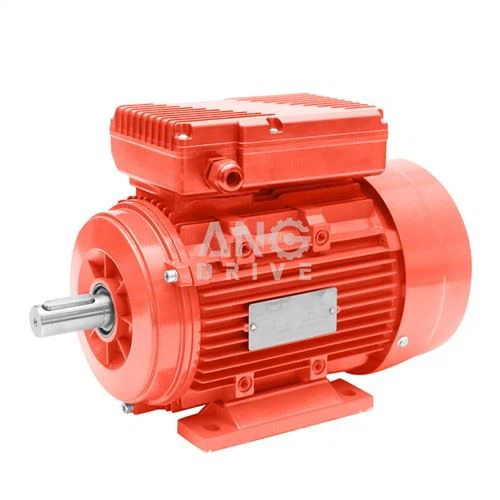
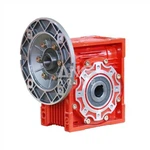
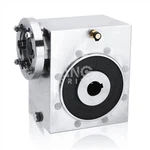
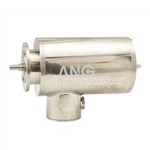
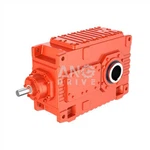
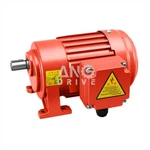
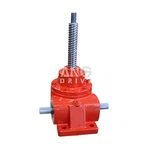
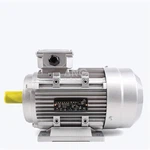

Induction Engine
video

Induction Engine

Favorable price, fast delivery, timely service-- ANG is your reliable supplier of Induction Engine which is high efficiency, low noise, low temperature rise, long service life, etc.
Send Inquiry
Product Introduction

Induction Engine Features:

1. 100% copper winding wires, 100% output power, high quality cold roll silicon steel

2. Dynamically balanced, original structure and attractive appearance

3. High efficiency and power factor, energy-saving

4. Grade of power and mounting measurement are subject to the IEC standard

5. Standardization of mounting dimensions for inter changeability and case of maintenance

6. High starting torque, low noise, easy maintenance etc.

Induction Engine’s General specification:

Power

0.06 ~ 315kw

Frame Size

56 ~ 355

Phase

Single or Three

Efficiency Class

IE1 ~ IE4

Poles

2, 4, 6, 8 poles

Protection Class

IP44, IP54, IP55, IP56, IP65, IP67

Insulation Class

B, F, H

Mounting Type

B14, B3, B5, B35, B34

Ambient Temperature

-15 ~ +40 °C

Altitude

≤1000M

Material

Aluminum/Cast Iron


Why Choose Us


copper coils

● 100% Copper Coils

● High efficiency

● Running stable and safe


● Precision bearing

● Long service life

● High strength material- carbon   steel

● Good dust proof

bearing

rotor

● High precision rotor

● Brand new international standard rotor

● Multiple precision machining processed

● Running stable and low noise

●High quality cold rolled silicon steel sheet

● Low temperature rise

● Long service life

● Strong magnetic

● Running stable

image


Details:

Induction Engine

●High strength shaft

● Multiple reuse

● High efficiency

● Long service life

● Nice shell

● Rust-proof

● Keep new in long time

Induction Engine

Induction Engine

● High quality connection box

● Die-cast with high precision

● Uneasy to deform

● Long service life

● Fine processing cover

● Use high strength material

● Uneasy to deform

● Long service life


Induction Engine

Induction Engine

● High efficiency heat emission hole

● Large area porous heat dissipation

● Good heat dissipation performance

● Using at ease


Multiple application:

image

image

image

Mechanical engineering

Mining equipment

Electricity equipment

image

image

image

Industrial

Food processing

Metallurgy

What is an Electrical Motor

The motor or an electrical motor is a device that has brought about one of the biggest advancements in the fields of engineering and technology ever since the invention of electricity. A motor is nothing but an electro-mechanical device that converts electrical energy into mechanical energy. It’s because of motors, life is what it is today in the 21st century.

Without the motor, we had still been living in Sir Thomas Edison’s Era where the only purpose of electricity would have been to glow bulbs. There are different types of motorhave been developed for different specific purposes.


In simple words, we can say a device that produces rotational force is a motor. The very basic principle of functioning of an

In simple words, we can say a device that produces rotational force is a motor. The very basic principle of functioning of an electrical motor lies in the fact that force is experienced in the direction perpendicular to the magnetic field and the current when field and current are made to interact with each other.

Ever since the invention of motors, a lot of advancements have taken place in this field of engineering and it has become a subject of extreme importance for modern engineers. This particular webpage takes into consideration, the fact as mentioned above and provides a detailed description of all major electrical motors and motoring parts being used in the present era.

History of Motor

In the year 1821 British scientist Michael Faraday explained the conversion of electrical energy into mechanical energy by placing a current-carrying conductor in a magnetic field which resulted in the rotation of the conductor due to the torque produced by the mutual action of electrical current and field.

Based on his principal the most primitive of machines a DC (Direct Current) machine was designed by another British scientist William Sturgeon in the year 1832. But his model was overly expensive and wasn’t used for any practical purpose.

Later in the year 1886, the first electrical motor was invented by scientist Frank Julian Sprague. That was capable of rotating at a constant speed under a varied range of load and thus derived motoring action.


Among the four basic classifications of motors mentioned above the DC motor as the name suggests, is the only one that is driven by direct current. It’s the most primitive version of the electric motor where rotating torque is produced due to the flow of current through the conductor inside a magnetic field.

The rest are all AC electric motors and are driven by alternating current, for, e.g., the synchronous motor, which always runs at synchronous speed. Here the rotor is an electromagnet that is magnetically locked with stator rotating magnetic field and rotates with it. The speed of these machines is varied by varying the frequency (f) and the number of poles (P), as Ns = 120 f/P.

In another type of AC motor where rotating magnetic field cuts the rotor conductors, hence circulating current induced in these short-circuited rotor conductors. Due to the interaction of the magnetic field and these circulating currents, the rotor starts rotates and continues its rotation.

This is an induction motor, which is also known as the asynchronous motor runs at a speed lesser than synchronous speed, and the rotating torque and speed is governed by varying the slip which gives the difference between synchronous speed Ns, and rotor speed Nr,

It runs governing the principal of EMF induction due to varying flux density. Hence the name induction machine comes. Single-phase induction motor like a 3 phase, runs by the principal of emf induction due to flux, but the only difference is, it runs on single-phase supply and its starting methods are governed by two well-established theories, namely the Double Revolving field theory and the Crossfield theory.

Apart from the four basic types of motor mentioned above, there are several types Of special electrical motors like Linear Induction motor(LIM), Stepper motor, Servo motor, etc with special features that have been developed according to the needs of the industry or for a particular gadget like the use of hysteresis motor in hand watches because of its compactness.

Hot Tags: induction engine, China, suppliers, manufacturers, factory, wholesale, price

Send Inquiry

whatsapp

teams

E-mail

Inquiry