

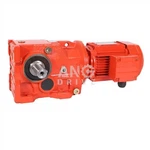
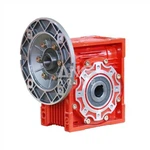

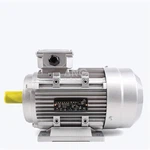


Asynchronous Electric Motor
Components of Asynchronous Electric Motor:
An asynchronous motor mainly consists of the stator and rotor, with an air gap between the stator and rotor. Other components include the end caps, bearings, and frame. Below is a detailed description:
Stator
Frame: Usually made of cast iron, though some are made from aluminum alloy. Large motors typically use welded steel plates for the frame. Its function is to secure the stator core and the front and rear end caps to support the rotor, as well as provide protection and heat dissipation.
Stator Core: Part of the motor's magnetic circuit, typically made from 0.35 - 0.5 mm thick silicon steel sheets with an insulating layer, which are punched and stacked. The inner circle of the core has uniformly distributed slots to house the stator windings.
Stator Windings: The electrical part of the motor, consisting of three windings symmetrically arranged 120° apart in space. These windings are placed into the stator slots in a specific pattern. When three-phase AC passes through these windings, a rotating magnetic field is generated.
Rotor
Shaft: Generally made from medium-carbon steel, it serves to support and fix the rotor core and transmit power.
Rotor Core: Also part of the motor's magnetic circuit, it is made of 0.5 mm thick silicon steel sheets stacked to form a cylindrical shape and mounted onto the rotor shaft. The rotor core has slots where the rotor windings are placed.
Rotor Windings: There are two types:
Squirrel Cage Rotor Windings: The rotor winding resembles a squirrel cage when there is no core. The rotor core has slots, and each slot contains a copper or aluminum conductor, with short-circuit rings at both ends to form a closed loop. In large and medium motors, copper is generally used for the conductors, while small motors often use aluminum. The rotor core is placed in a cast aluminum mold, and the squirrel cage along with the end fans are cast in one piece.
Wound Rotor Windings: Similar to the three-phase symmetric winding of the stator, the windings are placed in the rotor slots. The ends of the three-phase windings are connected in a star configuration internally. The first ends are led out to the center of the rotor shaft and connected to slip rings, which are then connected to external resistors via brushes to improve the motor's starting and speed control performance.
Other Components
Air Gap: The gap between the stator and rotor, typically ranging from 0.2 to 2.0 mm. The size of the air gap affects the motor's power factor and operational performance.
End Caps: Installed at both ends of the frame, they primarily provide support, holding the rotor shaft in place to allow the rotor to rotate stably within the stator.
Bearings: Positioned between the end caps and rotor shaft, they reduce friction, support the rotor, and ensure smooth rotation.
Bearing End Caps: Primarily protect the bearings from dust and debris, preventing contamination that could affect the bearing's normal operation.
Fan: Typically mounted at the rear end of the rotor, it rotates along with the rotor when the motor operates, causing airflow to cool the motor and reduce heat generated during operation.
Asynchronous Electric Motor General specification:
|
Power |
0.06 ~ 315kw |
|
Frame Size |
56 ~ 355 |
|
Phase |
Single or Three |
|
Efficiency Class |
IE1 ~ IE4 |
|
Poles |
2, 4, 6, 8 poles |
|
Protection Class |
IP44, IP54, IP55, IP56, IP65, IP67 |
|
Insulation Class |
B, F, H |
|
Mounting Type |
B14, B3, B5, B35, B34 |
|
Ambient Temperature |
-15 ~ +40 °C |
|
Altitude |
≤1000M |
|
Material |
Aluminum/Cast Iron |
What is the difference between synchronous and asynchronous motor?
Asynchronous Motor
The synchronous motor is a type of AC motor that runs at synchronous speed. The asynchronous motor is a type of AC motor that runs on speed less than the synchronous speed. It operates on the principle of magnetic interlocking between rotor and stator field.
How do AC Motor Works?
As we know from our previous article "differences between AC and DC motor", the DC motors operates on the principle of magnetic field acting on a current carrying conductor that experiences a mechanical force. Where the stator generates a static magnetic field, and the rotor consisting of multiple winding carries the input DC current.
In AC motors, the idea of rotational magnetic field RMF is utilized. The stator is made of multiple windings that generate a varying magnetic field upon supplying the input alternating current. This magnetic field rotates around the rotor.
Why Choose Us?
|
|
● 100% Copper Coils ● High efficiency ● Running stable and safe
|
|
● Precision bearing ● Long service life ● High strength material- carbon steel ● Good dustproof |
|
|
|
● High precision rotor ● Brand new international standard rotor ● Multiple precision machining processed ● Running stable and low noise |


FAQ
Q: Can you make the Asynchronous Electric Motor with customization?
A: Yes, we can customize per your request, like power, voltage, speed, shaft size, wires, connectors, capacitors, terminal box, IP grade, etc.
Q: What's your lead time?
A: Standard products need 5-30 days, a bit longer for customized products.
Q: Do you provide technical support?
A: Yes. Our company has a design and development team, we can provide technical support if you
need.
Hot Tags: asynchronous electric motor, China, suppliers, manufacturers, factory, wholesale, price
Previous
12V Gear MotorYou Might Also Like


Send Inquiry