

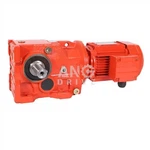
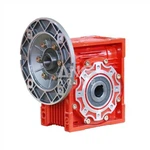

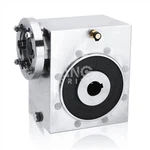
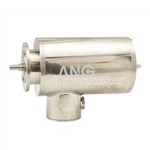
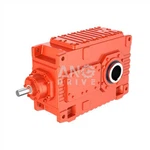
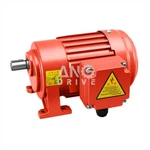
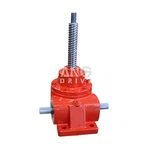
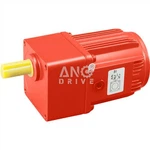
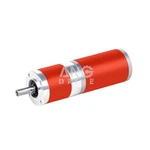
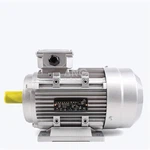
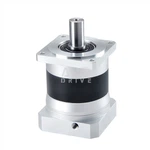


DC Motor Reducer
DC motor reducer
Performance
Excellent Speed Control: DC motors already offer great speed control, and with the addition of a gearbox, the speed adjustment range becomes more precise, making it suitable for varying operational conditions, such as in automated production lines.
High Starting Torque: DC motors can generate high torque at low speeds, overcoming the large load resistance during startup, which is ideal for applications like electric forklifts.
High Transmission Efficiency: The gearbox's improved design reduces energy transmission losses, and high-quality products achieve efficiencies of 80% to 90%, reducing energy consumption.
Structure
Compact Design: The motor and gearbox are integrated, taking up less space, which is ideal for environments with limited space, such as small robots and smart home devices.
Versatile Installation: Available with various mounting options, such as flanges and bases, offering strong flexibility and versatility.
Reliability
Stable Operation: The gearbox stabilizes the speed reduction and amplifies torque, reducing load impacts, resulting in a more reliable system with good long-term performance.
Long Lifespan: Made from high-quality materials and advanced manufacturing techniques, the system is wear-resistant, fatigue-resistant, and designed for proper lubrication and heat dissipation, which reduces maintenance costs.
Control
Easy to Control: DC motors are easy to control, and when paired with a gearbox, the control system can automatically adjust the motor's state based on the load, improving automation levels.
Quick Response: The system responds quickly to control signals, enabling rapid speed and torque adjustments to meet the demands of fast starts, stops, and frequent speed changes.
Specification:
|
Product Name |
ANG DC gear motor |
||
|
Motor type |
Brush type / Brushless type / Stepper type |
||
|
Frame size |
16mm ~ 130mm... can be customized |
||
|
Running speed |
Motor 1500-4000 rpm, Gear Ratio 1/3 ~ 1/3000 |
||
|
Output power |
3W ~2200W... can be customized |
||
|
Output shaft |
round shaft, D-cut shaft, key-way shaft, hollow shaft… |
||
|
Voltage type |
12V / 24V / 36V / 48V / 90V / 110V /220V... can be customized |
||
|
Accessories |
Internal driver / External driver / Connector / Brake / Encoder… |
||
|
Gearbox type |
Parallel shaft |
||
|
Right angle hollow worm shaft |
Right angle bevel hollow shaft |
Flat type hollow shaft |
|
|
Right angle solid worm shaft |
Right angle bevel solid shaft |
Flat type solid shaft |
|
|
Planetary center shaft |
|||
Applications

Operating Principle
Electromagnetic Principle
DC motors operate through the interaction between a magnetic field and current-carrying conductors. According to Fleming's Left-Hand Rule, when a conductor carrying current is placed in a magnetic field, it experiences a force. In a DC motor, the armature (the rotating part) contains coils that, when energized, interact with a magnetic field generated by permanent magnets or electromagnets.
Commutation
Commutation is an essential feature of DC motors. It reverses the direction of current in the armature coils as the armature turns, ensuring the torque direction remains constant for smooth, continuous rotation. In traditional DC motors, this process is carried out by a commutator (split-ring) and brushes. The brushes are in contact with the commutator segments, providing power to the armature coils. As the armature rotates, the commutator shifts the connection between the coils and the power source, reversing the current flow at the right moments.
Components and Functions
Armature: The armature, the rotating component of the DC motor, consists of a laminated iron core that reduces eddy-current losses and windings wrapped around it. When these windings are energized, they interact with the magnetic field to generate the torque necessary for rotation and to drive the connected load.
Excitation System: The excitation system in DC motors can be either permanent magnet-based or electromagnet-based. Permanent Magnet DC (PMDC) motors use permanent magnets to generate the magnetic field, commonly used in small devices. Electromagnetic-excited DC motors use excitation coils, which can either be powered by a separate DC source (separately excited) or by the same source as the armature (in series, shunt, or compound configurations) to produce the magnetic field interacting with the armature current.
Commutator and Brushes: The commutator is a cylindrical device made of insulated copper segments that changes the connection between the armature windings and the power source. Brushes, typically made from carbon or graphite, maintain contact with the commutator segments, transmitting current to the rotating armature.
FAQ
Q1: I want to buy your products, how can I pay?
A: You can pay via T/T(30%+70%), L/C, PayPal. It is safe and effective.
Q2: How can you guarantee the quality?
A: One year's warranty against B/L date. If you meet with quality problem, please send us pictures or video to check, we promise to send spare parts or new products to replace. Our guarantee does not include inappropriate operation or wrong specification selection.
Q3: How we select models and specifications?
A: You can email us the series code (for example R series helical gearbox) as well as requirement details, such as motor power, output speed or ratio, service factor, or your application...as much data as possible. If you can supply some pictures or drawings, it is nice.
Hot Tags: dc motor reducer, China, suppliers, manufacturers, factory, wholesale, price
Previous
Crusher GearboxNext
Micro DC MotorYou Might Also Like


Send Inquiry