

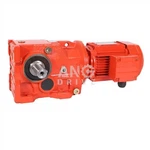
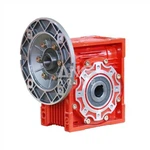

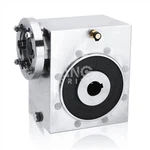
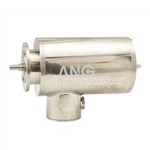
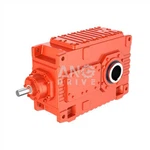
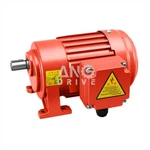
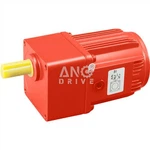
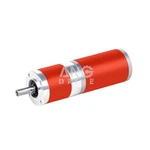
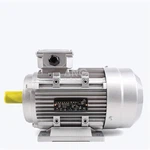
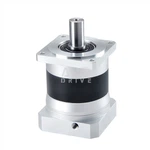


Brushless Dc Motor Drives
Brushless DC Motor Drives Parameters:
1) Dimensions: 16~130mm
2) Power: 3~2200W
3) Voltage: 12V 24V 48V 90V 310V
4) Rated speed: 2000rpm, 3000rpm
5) Reduction ratio: 3~ 200K
Brushless DC Motor Drives Features:
1. Compact structure and simple assembly;
2. Wide speed ranges and high torque;
3. Low noise, good sealing performance, high efficiency;
4. Stable and safe, long lifetime, universal;
5. Multi-structure, various assembling methods
Brushless DC Motor Drives Specification:
Product Name | ANG DC gear motor | ||
Motor type | Brush type / Brushless type / Stepper type | ||
Frame size | 16mm ~ 130mm... can be customized | ||
Running speed | Motor 1500-4000 rpm, Gear Ratio 1/3 ~ 1/3000 | ||
Output power | 3W ~2200W... can be customized | ||
Output shaft | round shaft, D-cut shaft, key-way shaft, hollow shaft… | ||
Voltage type | 12V / 24V / 36V / 48V / 90V / 110V /220V... can be customized | ||
Accessories | Internal driver / External driver / Connector / Brake / Encoder… | ||
Gearbox type | Parallel shaft | ||
Right angle hollow worm shaft | Right angle bevel hollow shaft | Flat type hollow shaft | |
Right angle solid worm shaft | Right angle bevel solid shaft | Flat type solid shaft | |
Planetary center shaft | |||
The development of semiconductor electronics in the 1970s allowed the commutator to be eliminated in DC motors, and also the brushes in permanent magnet motors. In brushless DC motors, an electronic servo system replaces the mechanical commutator contacts. An electronic sensor detects the angle of the rotor and controls semiconductor switches such as transistors which switch current through the windings, either reversing the direction of the current or in some motors turning it off, at the correct time each 180° shaft rotation so the electromagnets create torque in one direction. The elimination of the sliding contact allows brushless motors to have less friction and longer life; their working life is only limited by the lifetime of their bearings.
Brushed DC motors develop a maximum torque when stationary, linearly decreasing as velocity increases. Some limitations of brushed motors can be overcome by brushless motors; they include higher efficiency and lower susceptibility to mechanical wear. These benefits come at the cost of potentially less rugged, more complex, and more expensive control electronics.
A typical brushless motor has permanent magnets that rotate around a fixed armature, eliminating problems associated with connecting current to the moving armature. An electronic controller replaces the brush/commutator assembly of the brushed DC motor, which continually switches the phase to the windings to keep the motor turning. The controller performs similar timed power distribution by using a solid-state circuit rather than the brush/commutator system.
Brushless motors offer several advantages over brushed DC motors, including high torque to weight ratio, more torque per watt (increased efficiency), increased reliability, reduced noise, longer lifetime (no brush and commutator erosion), elimination of ionizing sparks from the commutator, and an overall reduction of electromagnetic interference (EMI). With no windings on the rotor, they are not subjected to centrifugal forces, and because the windings are supported by the housing, they can be cooled by conduction, requiring no airflow inside the motor for cooling. This in turn means that the motor's internals can be entirely enclosed and protected from dirt or other foreign matter.
Brushless motor commutation can be implemented in software using a microcontroller or microprocessor computer, or may alternatively be implemented using analog or digital circuits. Commutation with electronics instead of brushes allows for greater flexibility and capabilities not available with brushed DC motors, including speed limiting, "micro stepped" operation for slow and fine motion control, and a holding torque when stationary. Controller software can be customized to the specific motor being used in the application, resulting in greater commutation efficiency.
The maximum power that can be applied to a brushless motor is limited almost exclusively by heat; too much heat weakens the magnets and will damage the windings' insulation.
When converting electricity into mechanical power, brushless motors are more efficient than brushed motors. This improvement is largely due to the frequency at which the electricity is switched determined by the position sensor feedback. Additional gains are due to the absence of brushes, which reduces mechanical energy loss due to friction. The enhanced efficiency is greatest in the no-load and low-load region of the motor's performance curve. Under high mechanical loads, brushless motors and high-quality brushed motors are comparable inefficiencies.
Environments and requirements in which manufacturers use brushless-type DC motors include maintenance-free operation, high speeds, and operation where sparking is hazardous (i.e. explosive environments) or could affect electronically sensitive equipment.
The construction of a brushless motor resembles a stepper motor, but the motors have important differences due to differences in implementation and operation. While stepper motors are frequently stopped with the rotor in a defined angular position, a brushless motor is usually intended to produce continuous rotation. Both motor types may have but generally do not include a rotor position sensor for internal feedback. As a step motor, a well designed brushless motor can hold finite torque at zero rpm.
Hot Tags: brushless dc motor drives, China, suppliers, manufacturers, factory, wholesale, price
Previous
Small Dc Electric MotorYou Might Also Like


Send Inquiry