




Big Gear Wheel

Large Diameter Big Ring cheap girth gear (49)

Large Diameter Big Ring Gear Price (31)

Large Diameter Big Ring Gear Price (44)

Large Diameter Big Ring girth gear manufacturer (11)

Large Diameter Big Ring girth gear manufacturer (12)

Large Diameter Big Ring girth gear price (13)

Large Diameter Big Ring girth gear(54)
Big Gear Wheel
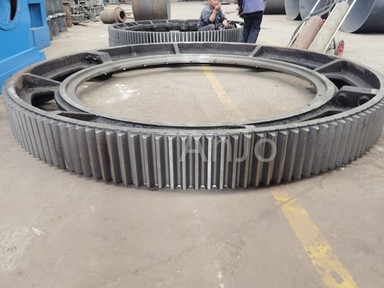
big gear wheel Features
| Type | Big gear wheel |
| Gear diameter | 2 meters, 3 meters, 4 meters, 5 meters, 6 meters, etc. |
| Accuracy level of gear | 6, 7, 8 |
| Sections | 1 pcs, 2 pcs, 4 pcs, 8 pcs, 16pcs |
| Material |
45# steel, 40Cr, 42CrMo, 40CrNiMo, or others |
| Grinding | Available |
| Heat treatment | Available |
| Related parts | We can provide an oil station, control system, gear reducers, electric motors |
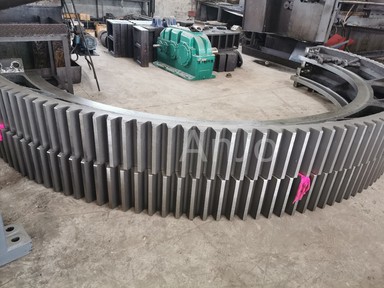
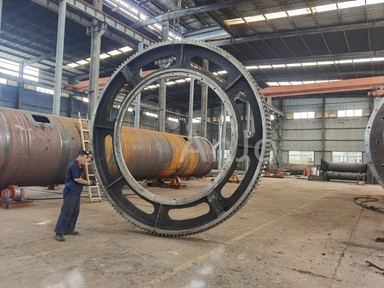
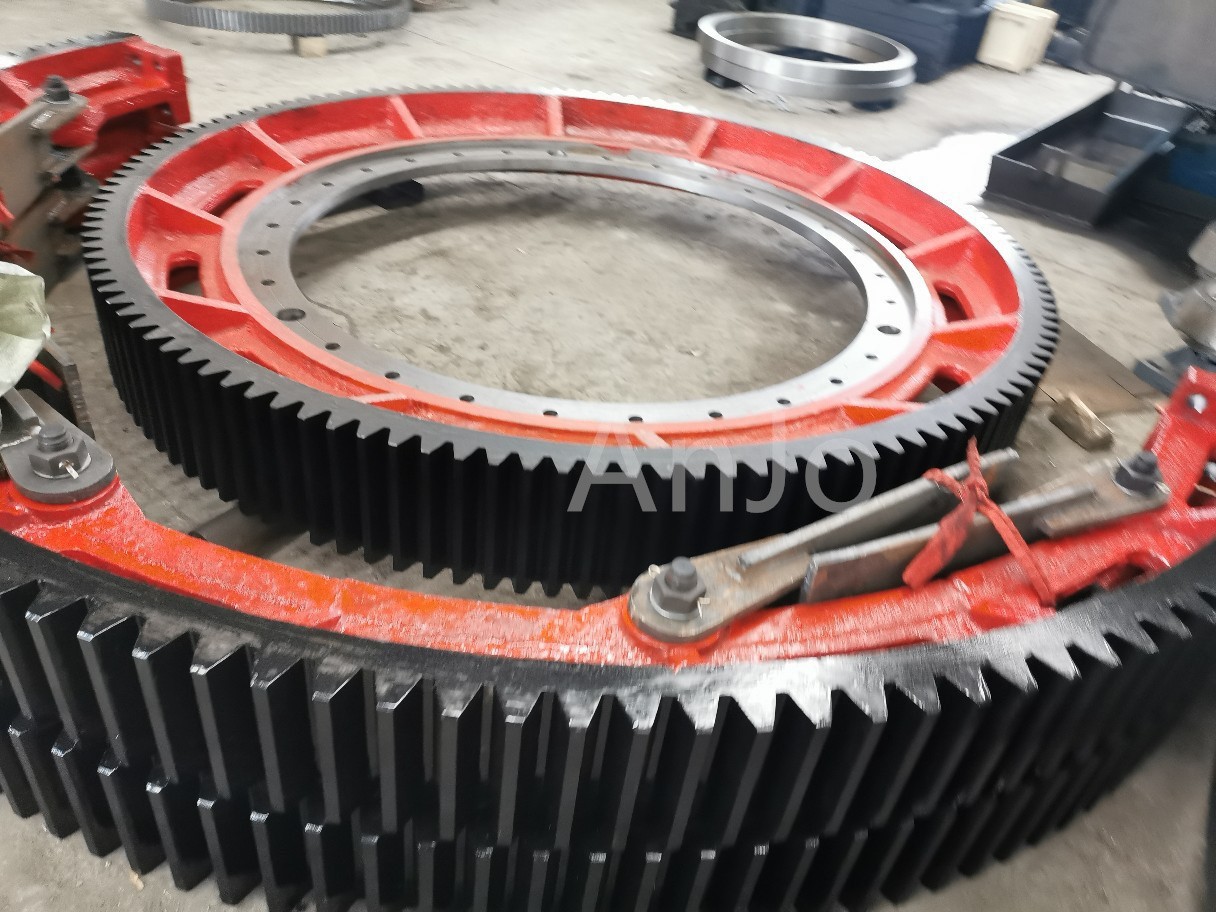
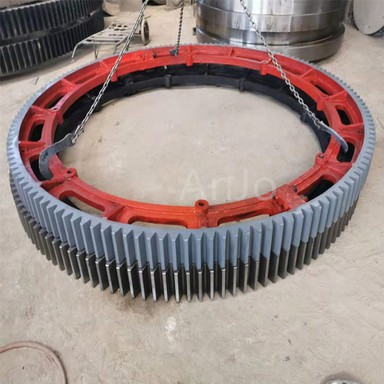
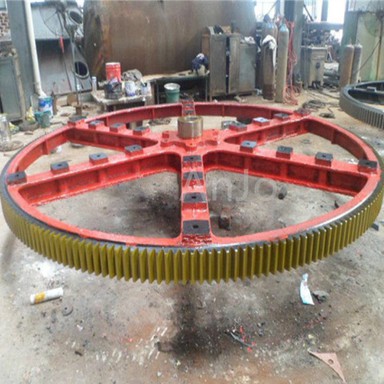
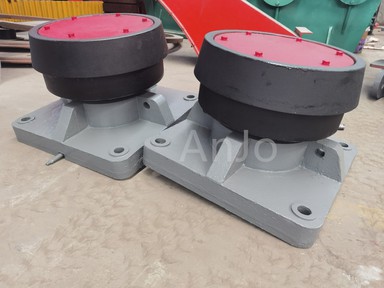
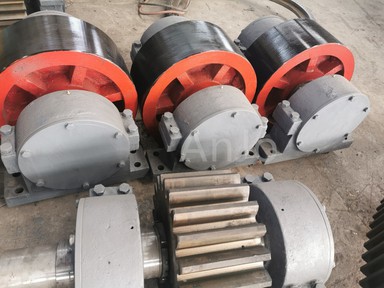
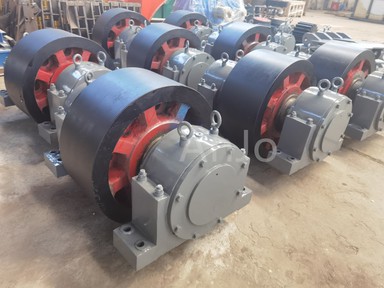
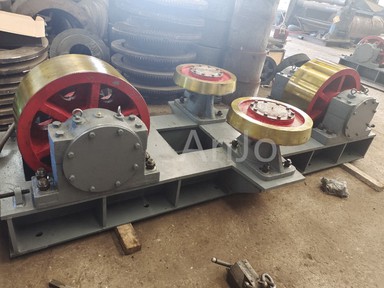
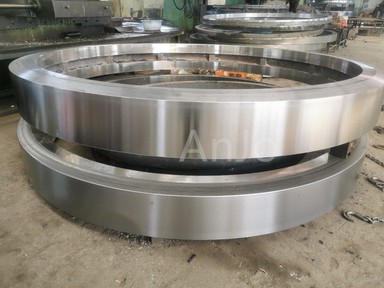
Photos of Big gear wheel


















Why Choose Our Big gear wheel?

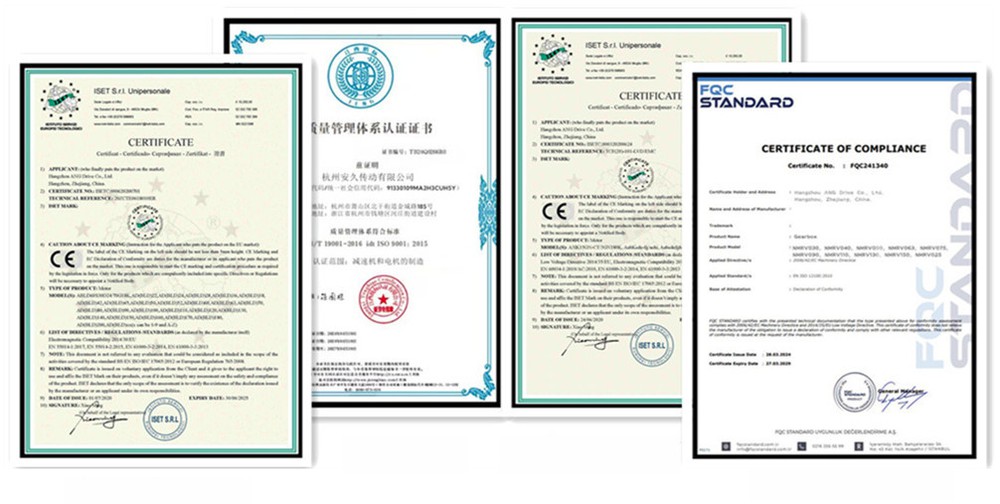
AnJo certificate
What are the Big gear wheel used with?
Big gear wheels are usually used with the following components:
Pinion: the big tooth ring meshes with the pinion to form a gear pair. The pinion is usually connected to the power source, such as the motor, engine, etc., through the pinion to drive the big gear ring rotation, you can achieve the effect of deceleration and torque, change the speed and torque size and direction, widely used in all kinds of mechanical transmission systems, such as automotive transmission, industrial gearbox and so on.
Planetary gear and sun gear: In the planetary gear mechanism, the big tooth ring and planetary gear and sun gear together form the planetary gear train. The sun gear is located in the center, and the planetary gear rotates around the sun gear and engages with the large tooth ring. This combination enables complex transmission functions, such as different gear shifts in an automatic transmission and efficient power transfer in the gearbox of a wind turbine.
Rack: The large gear ring can be used in conjunction with the rack to convert the rotating motion of the gear into the linear motion of the rack, or vice versa. It is often used in situations where linear motion is required, such as the bench feed mechanism of machine tools, the boom telescopic mechanism of cranes, and the steering system of automobiles to achieve accurate linear positioning and motion control.
Shaft and bearing: Large gear rings need to be mounted on the shaft and supported by bearings. The shaft is used to transmit the torque and rotating motion of the big gear ring, and transmit the power to other parts; The bearing plays a role in reducing friction, supporting the large gear ring and shaft, and ensuring that the large gear ring can rotate smoothly and smoothly, such as in the ball mill, rotary kiln and other equipment.
Support wheel and wheel belt: In some large rotary equipment, such as dryers, cement rotary kilns, etc., the large tooth ring is installed on the cylinder of the equipment, through the support wheel and wheel belt to support the weight of the cylinder and the large tooth ring, and ensure that the cylinder can rotate smoothly around the axis. The support wheel and the wheel belt cooperate with each other to provide stable support and rolling friction for the big tooth ring and the cylinder, so that the big tooth ring can drive the cylinder to rotate smoothly.
What are the common faults of the big gear wheel?
Big gear wheel in the use of a variety of failures, the need for targeted repair and maintenance, the following is a specific introduction:
Common fault
Tooth surface wear: Due to long-term meshing transmission, there is relative sliding and rolling friction between tooth surfaces, resulting in gradual wear of tooth surface materials, reducing tooth thickness, affecting transmission accuracy and carrying capacity. Especially in the case of poor lubrication, poor working environment (such as dust, corrosive media), wear will be aggravated.
Tooth surface bonding: under the condition of high speed and heavy load, the oil film between the tooth surfaces is easy to be destroyed, so that the metal of the two tooth surfaces directly contact and adhere to each other, with the rotation of the gear, the adhesive part is torn, forming a tear trace along the sliding direction of the tooth surface, that is, the bonding phenomenon.
Fatigue pitting of the tooth surface: the tooth surface will produce small fatigue cracks under the repeated action of contact stress, and with the expansion and mutual connection of the cracks, the metal of the tooth surface will fall off to form pitting pits, that is, fatigue pitting. This will reduce the contact strength of the tooth surface and affect the smooth operation of the gear.
Broken teeth: Because the gear in the transmission of torque, the root of the tooth to bear a large bending stress, when the bending stress exceeds the strength limit of the material, it may occur broken teeth. In addition, impact load, severe wear of the tooth surface resulting in too thin teeth and other factors can also increase the risk of broken teeth.
Ring deformation: Residual stress in the manufacturing process, improper operation during installation and thermal deformation in the working process of the large ring can cause deformation of the ring. The deformed gear ring will make poor contact with the tooth surface, affect the transmission accuracy and carrying capacity, and may even lead to interference between the gear and other components.
Maintenance method
Tooth surface wear repair: For the tooth surface with small wear amount, the tooth surface grinding, polishing and other methods can be used to improve the roughness of the tooth surface, reduce the friction coefficient and slow down the wear speed. If the amount of wear is large, the metal layer can be added to the tooth surface by surfacing welding, brush plating and other processes, and then the process is repaired to restore the shape and thickness of the tooth.
Tooth surface gluing repair: Slight gluing can be done by grinding the tooth surface to remove gluing marks and improve the contact condition of the tooth surface. In the case of serious gluing, it is necessary to replace the gear or repair the gluing part by large area surfacing welding and then rework the tooth surface.
Tooth surface fatigue pitting repair: For a small amount of pitting in the early stage, the tooth surface can be nitriding, hard chromium plating and other surface treatment to improve the hardness and fatigue resistance of the tooth surface. If the pitting corrosion is serious, only a new ring can be replaced.
Broken tooth repair: For unimportant gears or broken teeth are not serious, the broken tooth can be repaired by welding, but after welding, strict heat treatment and processing are required to ensure the accuracy of tooth shape and mechanical properties. In general, it is usually necessary to replace a new tooth ring after a broken tooth.
Tooth ring deformation repair: For tooth ring deformation caused by improper installation or thermal deformation, it can be corrected by adjusting the installation position and adopting appropriate cooling measures. For the tooth ring with large deformation, the method of mechanical correction or thermal correction can be used, but after correction, strict inspection and processing are required to ensure the accuracy of the tooth ring.
Maintenance measures
Regular lubrication: According to the requirements of the use of the equipment, regularly add or replace the appropriate lubricant to ensure that a good oil film is formed between the tooth surfaces to reduce friction and wear. At the same time, pay attention to check the quality and oil quantity of the lubricant to prevent the lubricant from being contaminated or leaking.
Cleaning and maintenance: regularly clean the dust, oil and debris on the surface of the big gear ring to prevent it from entering the meshing part of the tooth surface and aggravate wear. For large gear rings with harsh working environment, protective devices can be added, such as protective covers, seals, etc., to improve its dustproof and anti-corrosion ability.
Monitoring operation status: Install vibration monitoring, temperature monitoring and other sensors, real-time monitoring of the running status of the big gear ring, timely detection of abnormal vibration, temperature rise and other problems, in order to take appropriate measures. At the same time, the appearance of the big gear ring is checked regularly to see whether the tooth surface has wear, cracks and other defects.
Control the working load: Avoid the big gear ring in overload, impact load and other harsh working conditions, in strict accordance with the rated load and working conditions of the equipment to use. In the process of starting and stopping the equipment, it is necessary to smoothly operate and reduce the impact on the large gear ring.
Regularly check the installation accuracy: regularly check the installation accuracy of the big gear ring, including the radial runout of the gear ring, the end runout, the tooth side clearance and other parameters to ensure that the installation meets the requirements. If there is any deviation, adjust it in time to prevent premature damage to the gear ring due to improper installation.
How long is the daily maintenance cycle of the big gear Wheel?
The daily maintenance cycle of the big gear wheel has no fixed standard and will be affected by the working environment, running time, load size, and other factors. The following is the maintenance cycle reference under normal circumstances:
Lubrication check and supplement
General conditions: For large gear rings that work in a relatively clean and normal load environment, such as large gear rings in some light industrial equipment, lubrication checks are usually carried out every 200-300 hours or once a month to check the oil level and oil quality of the lubricating oil, and if necessary, timely supplement or replace the lubricating oil.
Harsh conditions: Large gear rings working in harsh environments such as high temperature, high humidity, dust or corrosive media, such as large gear rings in the mining and metallurgical industries, may need to be checked every 100-150 hours or every half month to ensure that the tooth surface always has good lubrication protection.
Cleaning and maintenance
General working condition: For large gear rings in general environment, it is recommended to clean the surface once a week to remove dust, oil and other debris on the surface to prevent it from entering the tooth surface meshing part.
Harsh conditions: In dusty environments, such as cement plants, stone plants, etc., it may be necessary to clean every day or every 2-3 days to reduce dust wear on the tooth surface.
Operating condition monitoring
Vibration and temperature monitoring: real-time or regular monitoring of large gear rings through vibration monitoring and temperature monitoring equipment. In general, the continuous operation of the large gear ring, at least once a day to carry out a routine inspection of vibration and temperature; For large load changes or large gear rings in critical equipment, it may be necessary to monitor every 4-8 hours in order to detect anomalies in time.
Appearance inspection: The appearance inspection of the large gear ring can be carried out once a week to check whether the tooth surface has obvious defects such as wear, cracks, spalling, and whether the connection part of the gear ring is loose.
Installation accuracy check
Usually every 3-6 months to carry out a comprehensive inspection of the installation accuracy of the big gear ring, including the radial runout of the gear ring, end runout, tooth side clearance and other parameters to ensure that the installation meets the requirements. For equipment with frequent start and stop or large load changes, the inspection cycle can be appropriately shortened to 2-3 months.
The actual maintenance cycle should be determined according to the specific use of the gear ring, combined with the equipment manufacturer's suggestions and previous maintenance experience, and make detailed maintenance records in order to adjust the maintenance plan according to the actual situation.
Hot Tags: big gear wheel, China, suppliers, manufacturers, factory, wholesale, price
Previous
Types Of BLDC MotorNext
Large Gear WheelYou Might Also Like


Send Inquiry